
MILA By The White Apron

SIY Development Team

How to Book a Wedding Venue: Wedding Venue Checklist

How to Book a Wedding Venue: Wedding Venue Checklist Booking a wedding venue is the most important decision you will make during your entire wedding planning journey. It determines your date, defines your atmosphere, and anchors every other supplier you will hire — from your photographer and caterer to your florist and entertainment. Get it right early, and the rest of your planning follows a clear path. Delay it or rush it, and everything downstream becomes harder. In the U.S., couples spend an average of $32,899 on their wedding day, with the venue alone accounting for roughly 40% of that total. With numbers like that, a structured, informed approach to finding and booking the right space is not optional — it is essential. This guide covers everything you need to know, in the order you need to know it. You will start by defining your wedding vision, style, and a realistic budget — including the 10–15% buffer most couples wish they had set aside for hidden fees. From there, you will learn how to build a shortlist, what to look for during site visits, which red flags to spot before you fall in love with the wrong venue, and the 25+ questions to ask every coordinator before committing to anything. You will also find a complete wedding venue checklist broken down by planning stage, an honest breakdown of the hidden costs that catch couples off guard — including service charges, overtime fees, and rental add-ons — and clear guidance on how far in advance to book based on your guest count, date, and location. Whether you are planning a 200-person celebration or an intimate micro-wedding for 40, this guide gives you the knowledge to choose confidently, negotiate smartly, and sign only when every detail is right. The U.S. wedding industry is valued at over $66 billion in 2025, with couples spending an average of $32,899 on their wedding day — and the venue alone accounts for roughly 40% of that total budget. The Wedding Report, 2025 1. Decide Your Wedding Vision and Budget Before you browse a single venue website or request a single brochure, get clear on two things: what you want, and what you can actually spend. These two factors will eliminate roughly half your options immediately — and that is a good thing. Narrowing your search early saves you from falling in love with spaces that were never viable to begin with. Define Your Wedding Style First Your venue should match the overall feel you want your guests to experience. A rustic barn feels completely different from a rooftop terrace — and neither is better. It all depends on your vision. Knowing your style before you search means you are looking for the right type of venue from the start, not just any venue that is available. Outdoor garden or vineyard for a romantic, nature-inspired atmosphere Grand ballroom or hotel for a formal, elegant celebration Rustic barn or farm for a relaxed, country-style vibe Beach or waterfront for a scenic, laid-back setting Industrial loft or art gallery for a modern, creative aesthetic Historic estate or manor for a timeless, traditional feel Set a Realistic Venue Budget Couples in the U.S. spend an average of $12,000 on their wedding venue — representing around 40% of their total wedding budget. If your budget is tighter than the national average, knowing this proportion still helps you set a proportionate venue target. Factor in not just the rental fee but also catering minimums, staffing, setup charges, overtime, and any mandatory vendor fees that the venue builds into its pricing. Calculate your total wedding budget first, before looking at venues Allocate 30–40% of that amount specifically to the venue Add a 10–15% buffer for unexpected fees — more on this in Section 5 Decide early whether you want an all-inclusive venue or a blank canvas space without added services like catering, staffing, decor, or furniture, as these require very different supplementary budgets Nail Down Your Guest Count Your guest list directly determines which venues are worth considering. There is no point falling in love with a space that holds 80 people if your list is 160. Equally, a venue that holds 300 will feel empty and impersonal if you are hosting 90. Aim for a venue that fits your guest count comfortably at around 70–80% of its maximum capacity — this gives everyone space to breathe without the room feeling sparse. The average U.S. wedding hosts between 122 and 132 guests in 2025. Meanwhile, micro-weddings (50 guests or fewer) made up 18% of all nuptials in 2024 — nearly double the 10% share they held in 2013. Weddings with 100–150 guests remain the most common size bracket. The Wedding Report & Axios, 2024–2025 If you are considering a smaller celebration, the numbers make a compelling case: micro-weddings can cost as little as $5,000–$10,000 with an all-inclusive package, compared to the $33,000–$36,000 national average for a full-size wedding. The savings come primarily from headcount-driven costs like catering, invitations, and venue capacity requirements. 2. Start Searching for Wedding Venues With your vision, budget, and guest count settled, the search begins. Use multiple channels to build a longlist of venues worth investigating, then filter methodically rather than emotionally. Where to Look Wedding planning platforms like The Knot, WeddingWire, and Hitched Instagram and Pinterest using location-specific wedding hashtags Recommendations from recently married friends or family who can give candid feedback Local wedding fairs and bridal expos — a chance to see venues presenting themselves in person Your wedding planner’s preferred venue list, if you have one — planners often know things about venues that reviews never capture Google Maps searches for event spaces in your target area — some hidden gems do not appear on wedding directories 87% of couples use online platforms like Pinterest and The Knot to plan their weddings. Online booking for wedding services is expected to grow at 14.4% annually through 2030 — but 75.8% of couples still prefer in-person, offline
How to Choose the Perfect Wedding Venue in Seacoast, New Hamshire

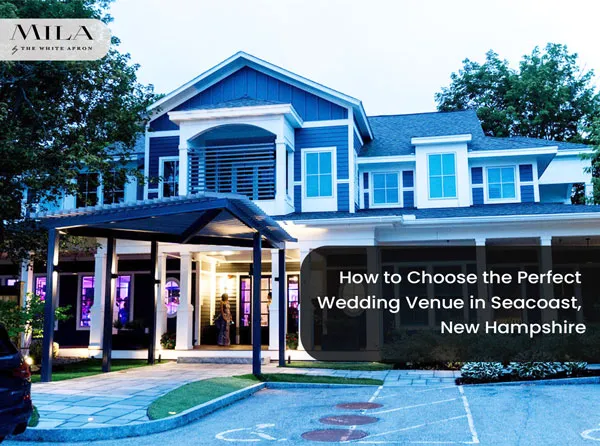
How to Choose the Perfect Wedding Venue in Seacoast, New Hampshire Plan Your Seacoast Wedding at MILA Selecting the perfect wedding venue in New Hampshire’s Seacoast region is one of the most important decisions in your wedding planning journey, shaping the atmosphere, guest experience, budget, and overall flow of your day. The region stretches along 18 miles of Atlantic coastline and extends inland to include communities such as Portsmouth, Dover, Exeter, Durham, Rochester, Hampton, Rye, New Castle, North Hampton, Seabrook, Hampton Falls, Greenland, Stratham, Kensington, and Epping.   Each offers unique options, from oceanfront properties with lighthouse backdrops to historic Portsmouth mansions, rustic countryside barns, and elegant garden estates. Portsmouth serves as the cultural and commercial hub, while Dover is the largest city and Exeter holds historical significance as a colonial town and former state capitol. When choosing a venue, it is essential to define your wedding’s core identity and capacity needs, evaluate location logistics, and consider seasonal advantages. Understanding complex pricing structures, hidden costs, and vendor policies helps prevent surprises, while reviewing amenities such as kitchen facilities, electrical capacity, parking, and nearby accommodations ensures both comfort and convenience. Preparing for New England’s unpredictable weather and checking cancellation policies and insurance requirements are also critical steps to protect your plans. Whether planning an intimate 50-guest beachfront ceremony in Rye or New Castle, a grand 200-person ballroom celebration in downtown Portsmouth, or a rustic countryside wedding near Exeter or Durham, attention to these factors ensures a seamless experience. Thorough venue tours reveal details that photos cannot capture, helping you choose a space that aligns with your vision, respects your budget, and provides a strong foundation for a wedding day filled with cherished memories for you and your guests. Understanding Your Wedding Vision and Guest Experience Your venue selection process begins with defining your wedding’s core identity—whether you envision an intimate beachfront ceremony with sand between your toes, a sophisticated ballroom affair in a historic hotel, or a rustic celebration in a converted barn overlooking salt marshes. The Seacoast region accommodates all these styles, but clarity about your preferences will streamline your search and prevent decision paralysis when viewing multiple beautiful properties. Consider how many guests you’ll invite, as capacity constraints will immediately narrow your options. Intimate gatherings of 50 guests have vastly different venue requirements than celebrations hosting 200 people. Your guest list also determines parking needs, accommodation proximity, and accessibility requirements, all of which will significantly impact everyone’s experience throughout your wedding day. A Venue That Supports Your Vision At MILA, weddings are designed around your guest experience—from flexible layouts and thoughtful flow to a setting that adapts seamlessly to intimate gatherings or larger celebrations without compromising atmosphere. See How MILA Brings Wedding Visions to Life Exploring Seacoast Venue Categories and Their Unique Advantages Waterfront properties represent the Seacoast’s most iconic venue category, offering ceremonies with ocean views, lighthouse backdrops, and sunset receptions that capitalize on the region’s maritime heritage. These venues—including oceanfront hotels, private estates with coastal access, and beachside parks—provide built-in photographic opportunities and natural ambiance that minimizes decoration needs while maximizing visual impact. Historic venues in Portsmouth’s downtown district bring architectural grandeur and cultural significance to weddings. Restored mansions, century-old inns, and heritage properties offer period details like exposed brick walls, ornate moldings, and antique fixtures that create sophisticated atmospheres without extensive styling. Barn and farm venues throughout the Seacoast countryside deliver rustic authenticity combined with modern amenities. Featuring weathered wood interiors, pastoral landscapes, and flexible spaces, they accommodate both ceremonies and receptions under one roof. Garden estates and botanical venues provide lush outdoor settings with manicured grounds, flowering landscapes, and natural canopies. These spaces work beautifully for spring and summer celebrations when weather cooperation is most reliable. A Refined Wedding Venue in the Heart of Historic Exeter MILA blends colonial character with modern elegance in downtown Exeter, offering a refined, architectural setting designed for weddings that prioritize atmosphere, authenticity, and timeless New England style. Explore MILA as Your Wedding Venue Timing Your Venue Search and Securing Peak Dates Seacoast wedding venues book quickly for prime season dates, with popular summer weekends—particularly June through September—often reserved 12 to 18 months in advance by couples seeking guaranteed warm weather and outdoor celebration opportunities. Starting your venue search immediately after engagement gives you maximum flexibility in date selection and venue availability, while waiting until six months before your desired wedding date may force compromises on either your preferred venue or your ideal timing. Fall weddings in October and November offer distinct advantages in the Seacoast region, including stunning foliage backdrops, moderate temperatures, and slightly reduced venue competition compared to peak summer months. Winter weddings provide budget-conscious couples with significant savings opportunities, as many venues offer reduced minimums or even reduced rates for November through March dates when demand decreases and indoor-focused venues become particularly attractive options. Evaluating Location Logistics and Guest Accessibility Your venue’s geographic position within the Seacoast region affects travel convenience for guests coming from Boston (roughly 60 miles south), Portland (50 miles north), and other New England locations that comprise most Seacoast wedding guest lists. Portsmouth venues offer the region’s best accessibility, with downtown locations providing walking-distance accommodation options, diverse restaurant choices for rehearsal dinners and post-wedding brunches, and cultural attractions that transform wedding weekends into mini-vacations for traveling guests. Coastal venues in Rye, New Castle, and Hampton deliver quintessential seaside settings but require more deliberate transportation planning, as guests may need shuttles between hotels and ceremony sites—especially if alcohol service makes driving inadvisable. MILA’s Ideal Exeter Location At One Franklin Street in historic downtown Exeter, MILA places guests within walking distance of boutique hotels, with larger hotel options just 3–20 minutes away and easy regional access. See Exeter & MILA Location Benefits Parking availability becomes critical when evaluating any venue, as inadequate guest parking creates stress and delays that can tarnish otherwise perfect celebration days. Confirm whether venues provide sufficient on-site parking or have arranged overflow options nearby. Accommodation proximity directly impacts guest satisfaction and