
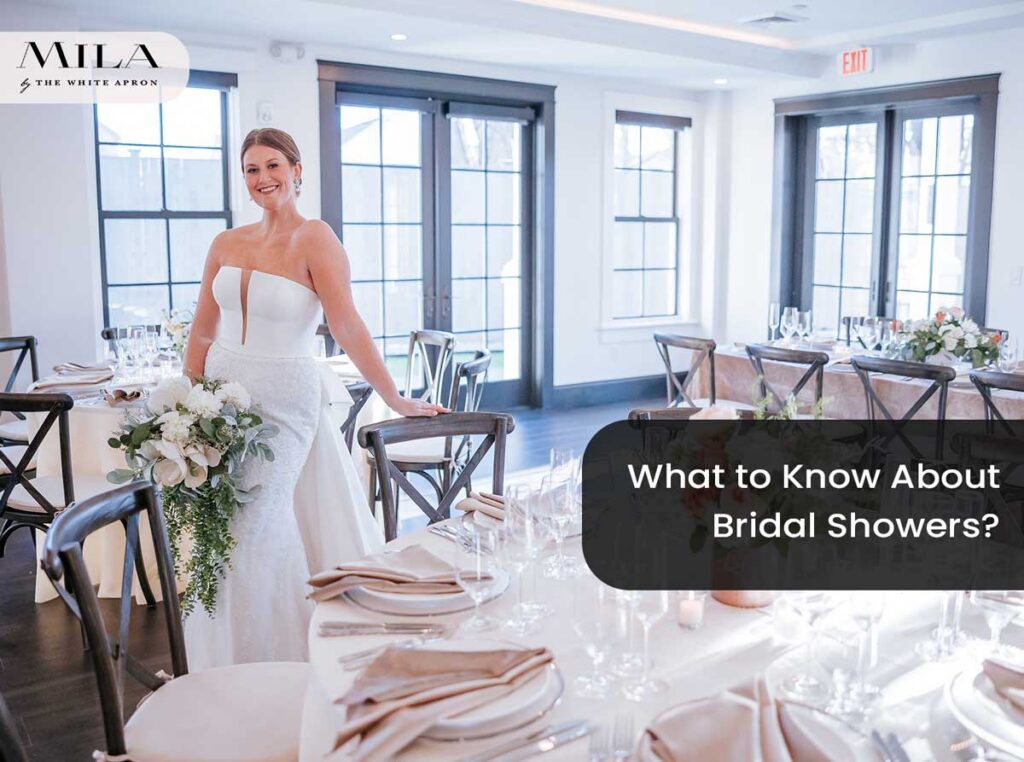
A bridal shower is a pre-wedding celebration held to honor the bride, where friends and family gather to shower her with gifts, encouragement, and support before she gets married. Unlike a bachelorette party, which focuses on a night out, or an engagement party, which celebrates the couple right after they get engaged, a bridal shower centers specifically on the bride and typically takes place two to three months before the wedding.
This guide covers everything involved in hosting or attending one. It explains who traditionally hosts the event, usually the maid of honor or bridal party, and who covers the cost, along with realistic budget ranges based on guest count and venue.
It walks through building a guest list, choosing a date, and sending invitations four to six weeks in advance, plus the etiquette rule that anyone invited to the shower should also be invited to the wedding.
You’ll also find guidance on choosing a venue, picking a theme, planning food and drinks around dietary needs, and selecting games and activities, all while noting that none of these elements are mandatory. Sections on decorations, dress expectations, gift and registry etiquette, and general etiquette round out the planning side, followed by modern alternatives like coed, virtual, and no-gift showers, and a look at how cultural traditions shape the celebration differently across communities.
Finally, this guide includes a full planning timeline, common mistakes to avoid, and a practical checklist, so readers finish with a clear, actionable plan rather than just a list of ideas.
What Is a Bridal Shower?
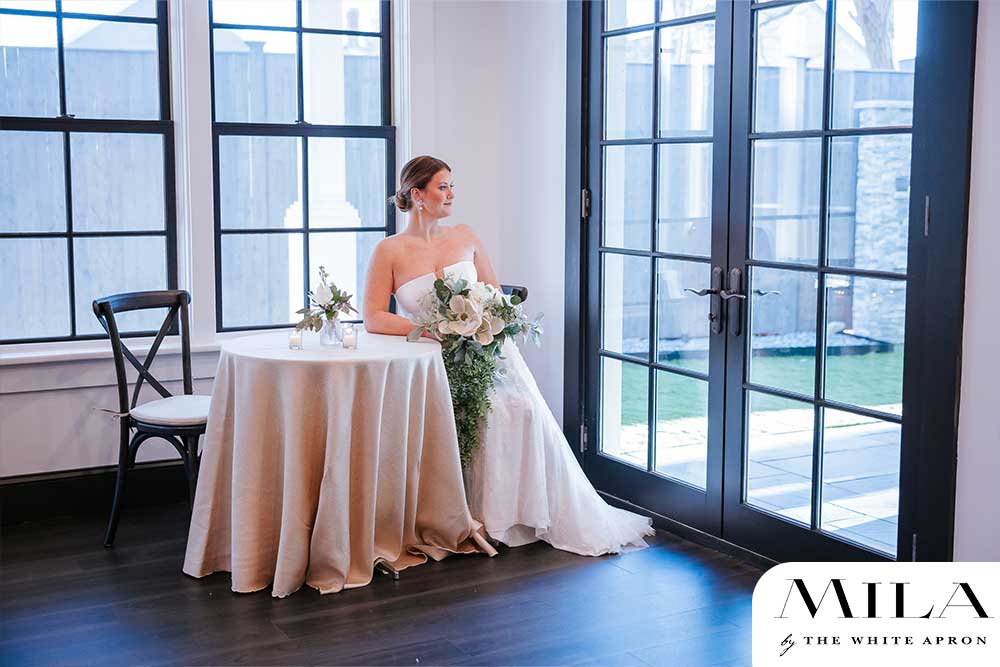
A bridal shower is a pre-wedding celebration held in honor of the bride to be. Friends and family gather to “shower” her with gifts, encouragement, and support as she prepares for married life. The event usually combines food, conversation, sometimes games, and a period of gift opening, all centered on celebrating the bride specifically rather than the couple as a whole.
Traditional bridal showers followed a fairly fixed format: an all-female guest list, a structured schedule of games, and gifts pulled from a registry. Modern bridal showers have loosened considerably. Coed guest lists, no-gift charity showers, virtual celebrations, and relaxed brunch-style gatherings are all common today. What hasn’t changed is the core purpose: celebrating the bride and helping her feel supported as she heads into marriage.
Is a bridal shower necessary? No. It’s a tradition many couples value, but it isn’t required for a wedding to happen. Some brides skip it in favor of a joint engagement celebration, a small dinner with close friends, or nothing at all.
What Is the Difference Between Bridal Shower, Wedding Shower and Bachelorette Party
These three events get confused often, but each one serves a different purpose.
- Bridal shower celebrates the bride specifically, with gifts geared toward her personal needs such as lingerie, beauty items, or keepsakes.
- Wedding shower celebrates the couple as a unit, typically including household gifts like kitchenware or home goods.
- Bachelorette party celebrates the bride’s last outing as a single woman, usually a night out, weekend trip, or party rather than a gift-focused gathering.
Many hosts now use “bridal shower” and “wedding shower” interchangeably, but the original distinction separated gifts meant for the bride personally from gifts meant for the shared household. A bachelorette party has no gift-giving tradition attached to it at all; it’s built entirely around celebration and fun.
An engagement party is a separate event too. It happens shortly after the couple gets engaged, usually includes both partners and both families, and doesn’t carry the same gift expectations a shower does.
Are Bridal Showers Only for Women?
Traditionally, yes. Bridal showers were women-only events, often limited to close female relatives and friends. That norm has shifted considerably. Many couples now host coed showers, sometimes called “Jack and Jill” showers, where both partners and their combined friend groups attend together.
Coed showers work particularly well for couples with mixed or blended friend groups, or for couples who simply prefer an inclusive celebration over a gendered one. There’s no rule requiring one format over the other; the right choice depends on the couple’s preferences and their social circle.
Who Hosts a Bridal Shower?
Traditionally, the maid or matron of honor hosts the bridal shower, often with help from the rest of the bridal party. Hosting responsibilities don’t have to fall on one person. Many showers today are co-hosted by a group of bridesmaids, a close friend, a sister, or a family member, splitting the workload and cost across several people.
Older etiquette discouraged the bride’s mother or the groom’s mother from hosting, since it could look like the bride’s own family were requesting gifts on her behalf. That rule has relaxed considerably, and mothers now frequently host or co-host showers without any social stigma attached.
Some families also hire a professional event planner for larger or more elaborate showers, particularly when the guest list is large or the venue requires more coordination than friends and family can manage on their own.
How Much Does a Bridal Shower Cost?
Bridal shower costs vary enormously depending on guest count, location, and event style. A simple home gathering with a potluck-style menu can cost very little, while a catered event at a rented venue can run into the thousands.
Major cost categories to plan for include:
- Venue: the rental fee for a home, restaurant, or event space.
- Food and drinks: the catering or grocery costs for the meal, snacks, and beverages.
- Cake or dessert: a dedicated dessert budget separate from the main menu.
- Decorations: flowers, signage, table settings, and theme-specific decor.
- Invitations: printing and postage, or a digital invitation service fee.
- Games and activities: supplies, prizes, or printed materials.
- Photography: a hired photographer or a simple photo backdrop setup.
- Entertainment: music, a playlist service, or live entertainment for larger events.
- Party favors: small take-home gifts for guests.
- Rentals: tables, chairs, linens, or tableware for larger gatherings.
- Transportation: relevant mainly for destination or multi-location showers.
- Contingency expenses: a buffer for last-minute additions or price changes.
There’s no fixed “right” budget for a bridal shower. The appropriate amount depends entirely on how many guests are attending, where the event is held, and how elaborate the host wants the celebration to be.
Who Should Be Invited to a Bridal Shower?
The guest list usually includes close family members, bridesmaids, and friends of the bride. A widely followed rule of thumb: anyone invited to the bridal shower should also be invited to the wedding.
Common guests include:
- Immediate family (mother, sisters, grandmothers, aunts)
- The bridal party
- Close friends of the bride
- The mother of the groom and his close relatives, when the shower extends to both families
- The groom’s friends or family members, for coed showers
Guest list size often depends on the shower’s style, ranging from an intimate gathering of ten people to a larger celebration of fifty or more. Small showers tend to favor more personal, conversation-heavy formats, while larger ones lean toward structured games and a formal schedule.
Should Everyone Invited to the Shower Be Invited to the Wedding?
Yes, this is considered standard etiquette. Inviting someone to a bridal shower but not the wedding can come across as only wanting a gift from them without including them in the actual celebration. Hosts should cross-check the shower guest list against the wedding guest list before sending invitations to avoid this situation.
When Should You Have a Bridal Shower?
Bridal showers usually take place two to three months before the wedding date. Some couples prefer to hold the shower closer to the wedding, within a few weeks, while others schedule it earlier to spread pre-wedding events across a longer stretch of time.
Weekends, particularly Saturday afternoons, remain the most popular time slot since they accommodate the largest number of guests. When choosing a date, hosts should also consider travel time for out-of-town guests, wedding-season scheduling conflicts, and how the shower date lines up with other pre-wedding events like the engagement party or bachelorette trip.
When Should Bridal Shower Invitations Be Sent?
Invitations should go out four to six weeks before the shower date. This gives guests enough time to plan, arrange travel if needed, and RSVP. For destination showers, or events happening during busy seasons like summer or December, sending invitations closer to eight weeks in advance gives guests more room to plan around other commitments.
How to Plan a Bridal Shower Step by Step
A bridal shower comes together through a fairly predictable sequence of decisions. Working through them in order keeps the process manageable:
- Confirm the bride’s preferences before making any other decisions.
- Set a realistic budget based on guest count and desired style.
- Choose the host or group of co-hosts.
- Build the guest list, cross-checked against the wedding list.
- Select a date that works for the bride and key guests.
- Choose a venue that fits the guest count and budget.
- Pick a theme or style, or decide to skip one entirely.
- Send invitations four to six weeks in advance.
- Plan the food and drink menu, accounting for dietary needs.
- Choose games or activities, if the bride wants them.
- Arrange decorations that match the venue and theme.
- Organize gift and registry information for guests.
- Confirm RSVPs and finalize the headcount.
- Handle final logistics: seating, timing, and vendor confirmations.
- Host the event.
- Manage post-event tasks like thank-you notes and gift tracking.
How to Choose a Bridal Shower Venue?
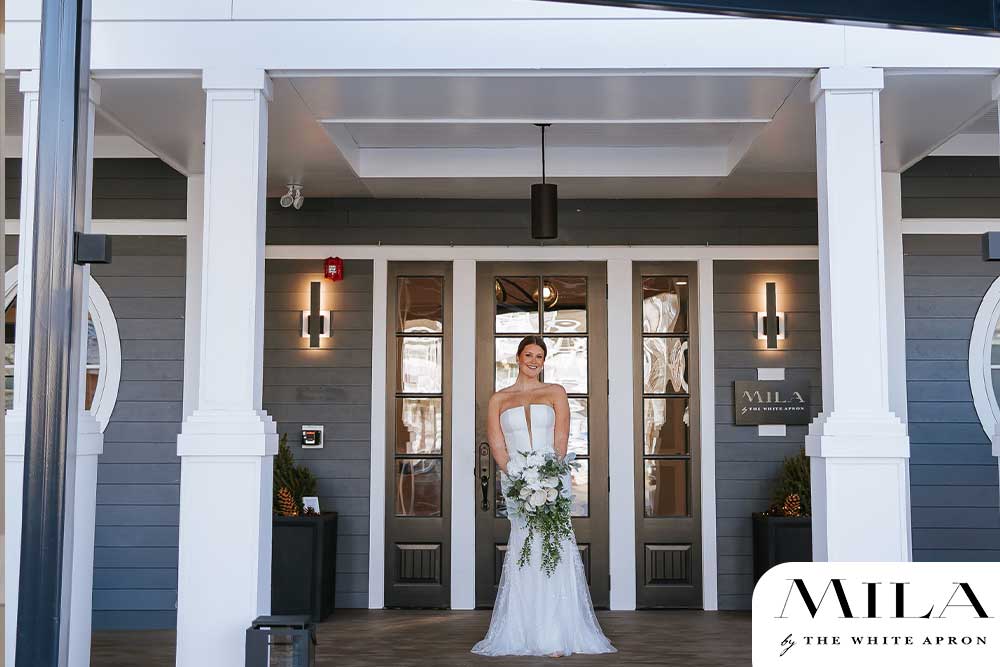
Popular venue choices include a family member’s home, a restaurant private room, a café, a hotel event space, a garden or outdoor location, a rented event venue, a community space, or a virtual setting for remote guests.
Key factors to weigh when choosing a venue:
- Capacity: the space should comfortably fit the expected number of guests.
- Cost: the rental fee should fit within the overall shower budget.
- Accessibility: the venue should be easy to reach and navigate for all guests, including those with mobility needs.
- Parking: the location should offer sufficient parking or nearby transit access.
- Weather: outdoor venues need a backup plan in case of rain or extreme heat.
- Catering: the venue should allow outside food or offer an in-house catering option.
- Privacy: the space should provide enough separation from other patrons or events.
- Restrooms: the venue should have adequate facilities for the guest count.
- Setup and cleanup: the venue’s policies should allow enough time before and after the event.
Home hosting keeps costs low and adds a personal touch, while restaurants and rented venues reduce the workload on the host by handling food, seating, and cleanup.
Bridal Shower Invitations
Invitations do more than announce a date and time. They set the tone for the entire event, tell guests what to expect, and give them the practical details they need to show up prepared. A well-designed invitation should include the following:
- Bride’s name and event type (clearly stating it’s a bridal shower)
- Date, time, and venue address
- Host’s name and contact information
- RSVP instructions and a clear deadline
- Registry information, where appropriate
- Dress code or theme details, if relevant
- Parking or arrival instructions, for venues that need them
Bridal Shower Invitations
Invitations do more than announce a date and time. They set the tone for the entire event, tell guests what to expect, and give them the practical details they need to show up prepared. A well-designed invitation should include the following:
- Bride’s name and event type (clearly stating it’s a bridal shower)
- Date, time, and venue address
- Host’s name and contact information
- RSVP instructions and a clear deadline
- Registry information, where appropriate
- Dress code or theme details, if relevant
- Parking or arrival instructions, for venues that need them
Example Invitation Wording
Please join us in celebratingBride’s Nameas she prepares to say “I do”
Hosted by “Insert Host’s Name”
Saturday, October 17th at 1:00 PM
The Garden Room, 214 Maple Avenue
Theme: Garden Brunch. Please wear your favorite floral dress
Kindly RSVP by October 3rd to hostname@email.com
Registered at Crate & Barrel and Zola
This kind of format works for both physical cards and digital invitations. Hosts can adjust the tone up or down depending on formality, swapping “Please join us” for something more casual like “Let’s shower Bride’s Name with love!” for a relaxed gathering.
Physical vs. Digital Invitations
Factor | Physical Invitations | Digital Invitations |
|---|---|---|
Formality | More formal, tangible feel | Casual to semi-formal |
Cost | Higher, printing and postage | Lower or free |
Turnaround | Slower to send and receive RSVPs | Fast, near-instant RSVP tracking |
Best for | Traditional showers, older relatives | Close friend groups, last-minute planning |
Many hosts choose digital invitations for convenience and easy RSVP tracking, since most platforms automatically compile responses and dietary notes in one place. Physical cards remain popular for more traditional showers or guest lists that include older relatives who may not check email or apps regularly. Some hosts split the difference, sending a physical save-the-date early on, then following up with a digital invitation that includes the full event details and RSVP link. Neither format is inherently more appropriate; the right choice depends on the guest list and the tone the host wants to set.
What Happens at a Bridal Shower?
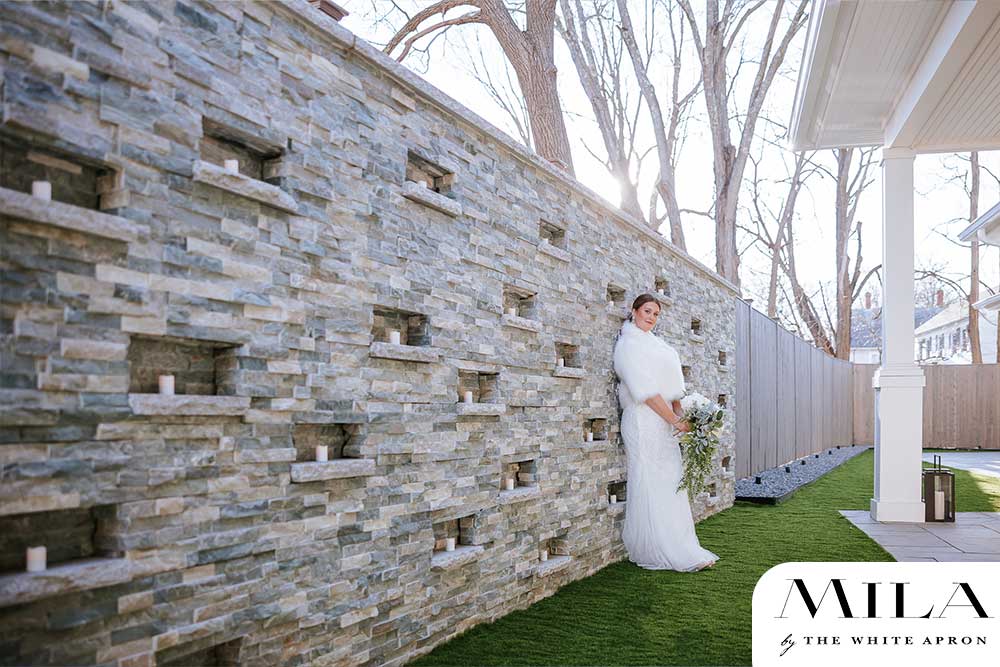
Knowing the typical flow of a bridal shower helps both hosts and guests know what to expect. While every shower looks a little different depending on size, theme, and formality, most follow a similar general structure:
- Guest arrival and mingling: guests arrive over a short window, greet the host and bride, and settle in with a drink while others continue to arrive.
- Welcome and introductions: the host welcomes everyone, thanks guests for coming, and briefly introduces the bride if guests come from different social circles who may not know each other.
- Food and drinks: a meal, brunch spread, or light appetizers are served, depending on the time of day and theme.
- An icebreaker activity: a short, low-pressure activity helps guests from different groups start talking to each other.
- Games or structured activities: one or more games run for twenty to forty-five minutes, often with small prizes for winners.
- Continued socializing: a more relaxed stretch of conversation, often paired with dessert or a second round of drinks.
- Gift opening: the bride opens gifts in front of guests, if planned, while someone tracks who gave what for thank-you notes later.
- Cake or dessert: a cake-cutting moment or dessert course, sometimes paired with a toast to the bride.
- Photos: group photos and candid shots, often near a decorated backdrop or the gift table.
- Closing remarks and thank-yous: the bride thanks everyone for coming, and the host wraps up the event.
Gift opening and games are both optional, not mandatory. Some brides prefer to open gifts privately after the event to keep the party moving, and some showers skip games entirely in favor of a relaxed, conversation-focused gathering. The flow above works as a flexible template rather than a fixed script.
Bridal Shower Food and Drink Ideas
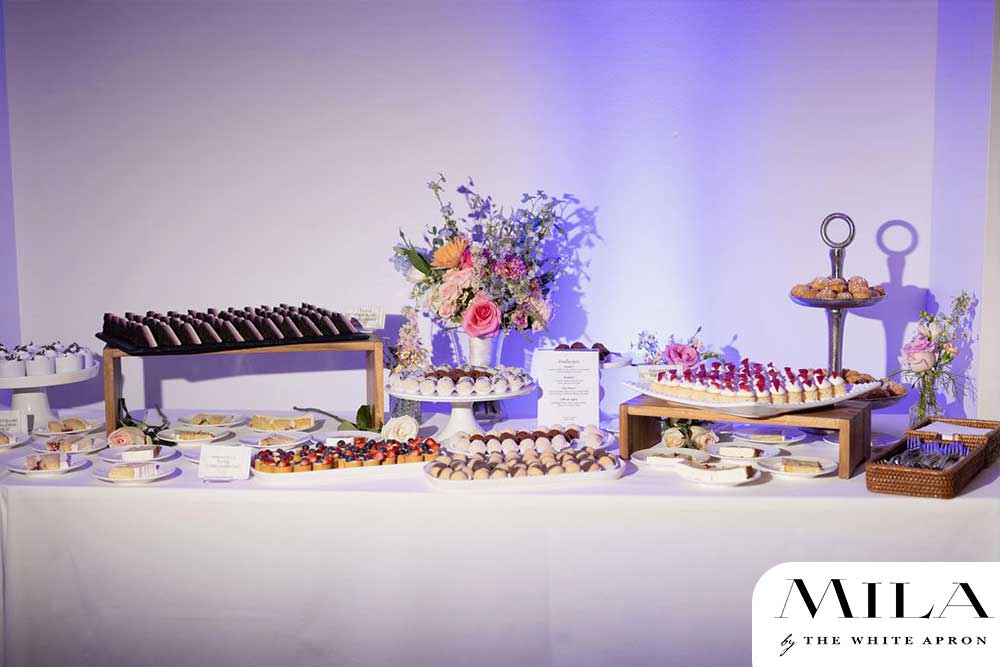
Food is one of the most memorable parts of a bridal shower, and the menu should match both the time of day and the overall theme.
- Brunch showers feature quiches, pastries, fruit platters, mini frittatas, and mimosas or a build-your-own mimosa bar with fresh juices.
- Afternoon tea showers feature finger sandwiches (cucumber, egg salad, chicken salad), scones with clotted cream and jam, small pastries, and a selection of loose-leaf teas.
- Evening showers feature appetizers like bruschetta or stuffed mushrooms, a light dinner such as pasta or a salad course, and wine or cocktails.
- Dessert-focused showers feature a spread of cupcakes, macarons, cookies, and a signature cake, often paired with coffee or a dessert wine.
Non-alcoholic options should always be available alongside anything alcoholic, including sparkling water, mocktails, and a full range of soft drinks, so every guest has something to enjoy regardless of preference.
When planning the menu, hosts should also account for guests who are vegetarian, vegan, or gluten-free, along with any food allergies or religious and cultural dietary practices, such as halal, kosher, or dairy-free requirements. Asking about dietary needs when collecting RSVPs makes this much easier to manage, since it lets the host plan around real numbers instead of guessing.
A signature drink or mocktail named after the couple is a small, personal touch many hosts enjoy adding, whether that’s a “Mr. and Mrs. Mule” or a fruit-based mocktail with a custom name printed on the menu card. Labeling dishes with small cards noting ingredients also helps guests with allergies navigate the spread confidently without needing to ask.
Bridal Shower Decorations
Decorations reinforce the shower’s theme and turn a regular room into a celebratory space. Common elements include the following:
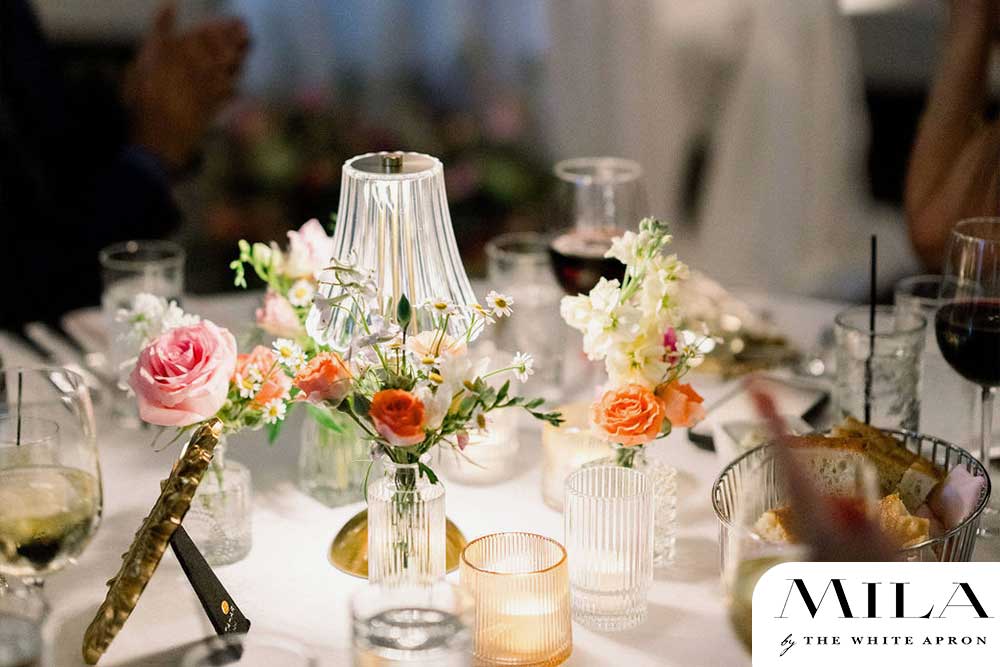
- Floral centerpieces: fresh or artificial arrangements placed on each table, often matching the shower’s color palette.
- Balloon arches or garlands: a popular backdrop feature for photos, usually built in the theme’s colors.
- A dedicated gift table: a clearly marked spot, often decorated separately from the main tables, where guests place gifts as they arrive.
- Personalized banners with the bride’s name: hung as a focal point, often reading something like “Bride to Be” or “Mrs. Soon to Be.”
- Table settings matching the color scheme: tablecloths, napkins, and place cards coordinated to the overall palette.
- A designated photo backdrop area: a decorated wall or floral arch where guests can take pictures throughout the event.
- Lighting that suits the venue and time of day: string lights for evening or outdoor showers, or natural light and simple candles for daytime brunches.
Keeping decorations aligned with the venue size and theme creates a polished look without overwhelming the space. A small apartment gathering doesn’t need the same scale of decor as a rented banquet hall, and matching the decoration budget to the venue size keeps the overall look intentional rather than sparse or cluttered.
Choosing reusable or low-waste decor is also worth considering. Potted plants instead of cut flowers, fabric banners instead of paper ones, and reusable tableware all reduce both cost and waste, and many of these items can be repurposed for future events like the wedding shower or bachelorette party.
What Should You Wear to a Bridal Shower?
Guests should dress according to the invitation’s stated dress code, which can range from casual to cocktail attire. When no dress code is specified, smart casual or semi-formal outfits work well for most bridal showers. Weather, season, and venue should also factor into what guests choose to wear, particularly for outdoor or garden-style showers.
Bright colors, florals, and pastels are common choices, though guests should avoid wearing white to keep the visual focus on the bride.
What Should the Bride Wear?
The bride typically wears something that stands out from her guests, whether that’s a white or pastel dress, a sash, or a small tiara or floral crown. Some brides choose colorful or culturally specific outfits instead of traditional white, depending on personal preference or family customs. Whatever the choice, the outfit should be comfortable enough for mingling, sitting through games, and opening gifts throughout the event.
Bridal Shower Gifts and Registry Etiquette
A bridal registry is a list of items the bride has selected ahead of time at one or more stores, giving guests a straightforward way to choose a gift she actually wants and needs. Registries reduce duplicate gifts and take the guesswork out of shopping, which is why most hosts share registry details directly on the invitation or through a dedicated wedding website.
Guests generally bring a gift from the registry, though personal, sentimental, or handmade gifts are also welcome, especially from close friends or family members who know the bride well. In some cultures, cash gifts or contributions toward a honeymoon fund are just as appropriate as physical items, and this expectation is often communicated clearly ahead of time to avoid confusion.
Gift Etiquette Guidelines
- Bring a gift, even when attending virtually: mailing a gift ahead of the event, or sending an e-gift card, keeps the tradition intact for remote guests.
- Stick close to the registry unless choosing something personal or sentimental: registry items reflect what the bride has specifically requested.
- Avoid extravagant gifts that may unintentionally outshine other guests’ contributions: particularly in group settings where gifts are opened publicly.
- Include a card with a personal note: a short, heartfelt message adds meaning beyond the gift itself.
- Group gifts are a good option for larger registry items: like kitchen appliances or furniture, letting several guests split the cost of a bigger-ticket item.
Gift expectations should be communicated tactfully, whether through the invitation, the registry link, or word of mouth from the host, and should respect what feels comfortable for both the couple and the guests. Hosts can include a simple line like “Registered at Store Name” on the invitation without making the gift expectation feel heavy-handed.
Bridal Shower Etiquette
Bridal shower etiquette covers expected behavior for hosts, the bride, and guests alike, though it should be treated as guidance rather than rigid law. Family traditions, culture, religion, budget, and personal preference can all reasonably change what’s considered appropriate.
- Hosts should send invitations on time and communicate the schedule clearly
- Guests should RSVP promptly and arrive on time
- Plus-ones are generally not invited unless specifically stated on the invitation
- Children’s attendance should be clarified in advance if the event isn’t kid-friendly
- Dietary needs should be requested and accommodated where possible
- Games and gift opening should never feel mandatory for the bride or guests
- Thank-you notes should follow within a few weeks of the event
Modern Bridal Shower Ideas
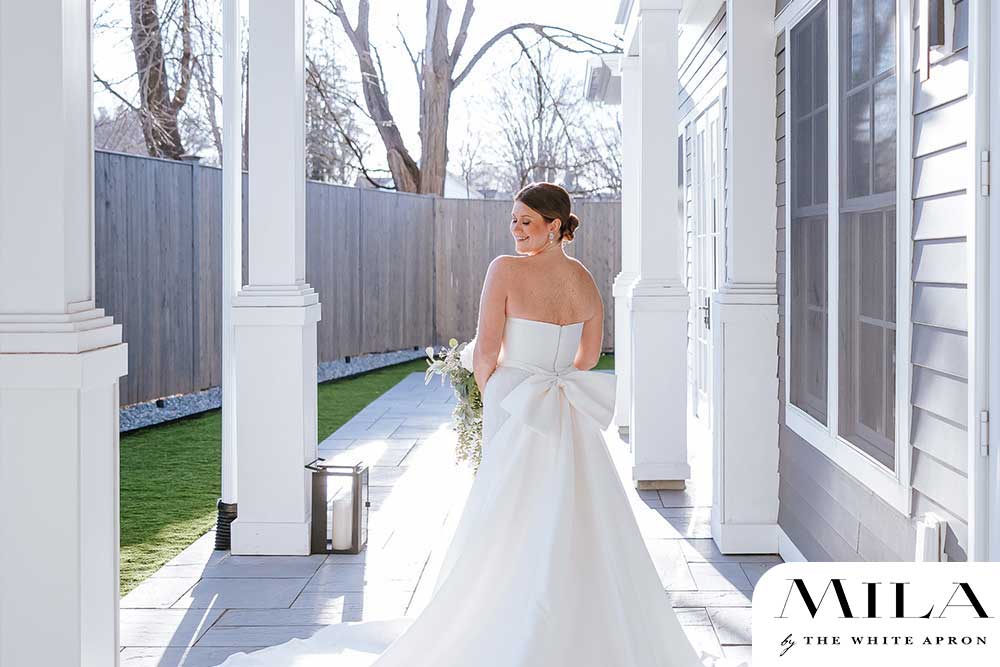
Contemporary bridal showers often move beyond the traditional format of an all-female afternoon gathering built entirely around gift opening. Couples today have far more flexibility in how they celebrate, and many modern approaches reflect changing social norms around gender roles, distance, and personal preference.
- Coed or “Jack and Jill” showers: both partners and their combined friend groups attend together, shifting the event from a bride-only celebration to a joint one.
- Couples showers: similar to a coed shower, but specifically centered on celebrating both partners as a unit, often including gifts for the shared household.
- Smaller, more intimate gatherings: a trend toward scaled-down showers with a guest list of ten or fewer, focused on close friends and family rather than a large crowd.
- Virtual showers: guests join through a video call, with games adapted for screen sharing and gifts mailed ahead of time so the bride can open them live on camera.
- Destination showers: combined with other pre-wedding travel, such as a weekend trip that includes both the shower and a smaller bachelorette-style outing.
- Experience-based celebrations: a spa day, wine tasting, cooking class, or similar shared activity replaces the traditional sit-down party format.
- Charity-focused showers: guests donate to a cause the couple cares about instead of, or alongside, traditional gifts.
- No-gift showers: focused purely on spending time together, often chosen by couples who are older, previously married, or already have an established household.
These modern formats aren’t replacements for tradition so much as additional options. Many couples still choose a classic afternoon shower, and there’s no requirement to pick a “modern” format just because it exists. The goal is choosing whatever setup fits the couple’s actual life and relationships best.
Cultural and Regional Bridal Shower Traditions
Bridal shower customs vary considerably by family, region, religion, and culture, and no single tradition should be treated as a universal rule. Some cultures incorporate specific rituals tied to their broader wedding customs, such as symbolic gift-giving, particular foods believed to bring good fortune, or specific clothing worn by the bride and close family members.
Regional differences also show up in guest list size, gift expectations, and formality level. Some communities favor large, multi-generational gatherings that blend the bridal shower with other pre-wedding rituals, while others prefer small, close-knit celebrations limited to immediate family and close friends.
Common Bridal Shower Mistakes to Avoid
- Planning without asking what the bride actually wants
- Setting an unrealistic budget for the guest count or venue
- Inviting more guests than the venue can comfortably hold
- Sending invitations too late for guests to plan around
- Ignoring dietary requirements when planning the menu
- Overloading the schedule with too many games or activities
- Making every activity or gift opening feel mandatory
- Assuming every bride wants traditional games
- Forgetting accessibility needs when choosing a venue
- Skipping a backup plan for outdoor events
- Leaving cleanup responsibilities unassigned
Bridal Shower Checklist
This checklist consolidates every stage of planning into one reference list, useful for printing out or copying into a notes app.
Planning
- Confirm the bride’s preferences for style, guest list, and activities
- Select the host or group of co-hosts
- Set the overall budget
- Choose the date
- Create the guest list
- Choose the venue
- Select a theme, if applicable
- Plan the food and drink menu
- Arrange a cake or dessert
- Select games and activities
- Purchase or order decorations
- Prepare printed materials for games
- Arrange seating for the expected headcount
- Prepare music or a playlist for background ambiance
- Confirm all vendors a final time
Invitations
- Create invitations, physical or digital
- Include essential event details (date, time, location, host, RSVP deadline)
- Include RSVP instructions and a registry link, if applicable
- Send invitations four to six weeks before the event
- Track responses as they come in
Final Preparation
- Confirm the final guest count with the venue and caterer
- Check dietary requirements against the finalized menu
- Confirm the venue booking and access times
- Prepare all supplies and pack them ahead of time
- Prepare gift table signage and registry information
- Create a simple event-day schedule to keep things on track
Afterward
- Clean up the venue or coordinate with staff
- Return any rented items
- Track gifts for thank-you note purposes
- Send thank-you notes within a few weeks
- Share photos with guests who attended or couldn’t make it
- What to Know About Bridal Showers?
- What Is a Bridal Shower?
- Who Hosts a Bridal Shower?
- How Much Does a Bridal Shower Cost?
- Who Should Be Invited to a Bridal Shower?
- When Should You Have a Bridal Shower?
- How to Plan a Bridal Shower Step by Step
- How to Choose a Bridal Shower Venue?
- Bridal Shower Invitations
- What Happens at a Bridal Shower?
- Bridal Shower Food and Drink Ideas
- Bridal Shower Decorations
- What Should You Wear to a Bridal Shower?
- Bridal Shower Gifts and Registry Etiquette
- Bridal Shower Etiquette
- Modern Bridal Shower Ideas
- Cultural and Regional Bridal Shower Traditions
- Common Bridal Shower Mistakes to Avoid
- Bridal Shower Checklist